Prices checked on
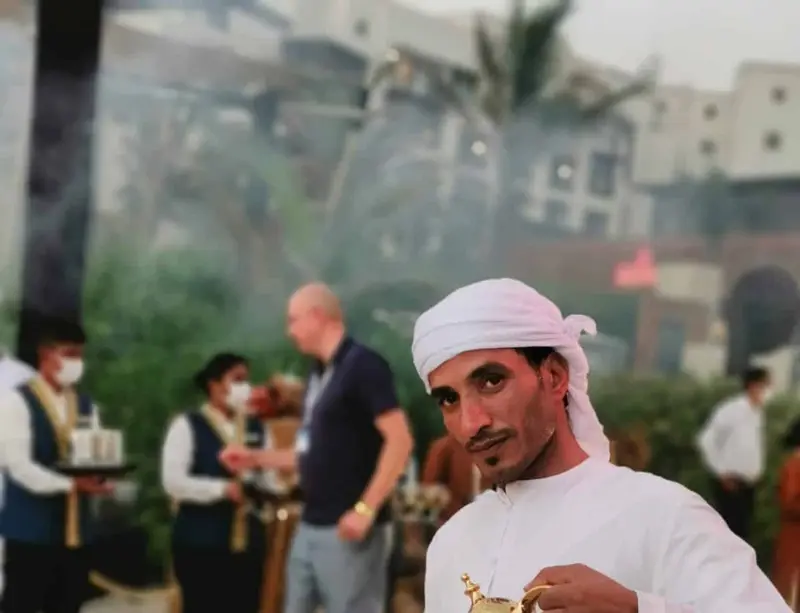
To serve Arabic coffee at an event, plan the hours and the guest count, put the coffee corner near the entrance, have coffee ready before the first guest, and follow the customs: right hand, small pours, eldest first, stop when the cup is shaken.
Price: our Arabic coffee service starts from AED 2,500 plus VAT plus transport, for 3 to 4 hours and around 150 guests. See Arabic coffee service prices.
How many hours of coffee should I plan?
Plan coffee for the whole welcome and the time guests stay seated; our base service runs 3 to 4 hours, enough for most receptions.
Think about when guests arrive and when they leave. A wedding reception, a National Day majlis or an iftar can run longer than four hours. If yours does, ask for extra hours in the quote. A short office welcome may only need coffee at the start, but the booking still covers the full service time.
How many servers do I need for my guest count?
The base service is planned for around 150 guests; for more guests, or many arriving at the same moment, the team quotes extra servers.
People often ask how many coffee servers they need for 100 guests. The honest answer: 100 guests usually fit inside the base service, which is planned for around 150. The real question is how guests arrive. If 100 people walk in together at a wedding, they all want a cup in the same ten minutes. If they drift into a majlis over an evening, the pace is easy.
Give the team three numbers: guests, hours, and how many arrive at once. It sets the number of servers for your event and confirms it in writing. Our Arabic coffee servers page explains what each server does.
Where should the coffee corner go?
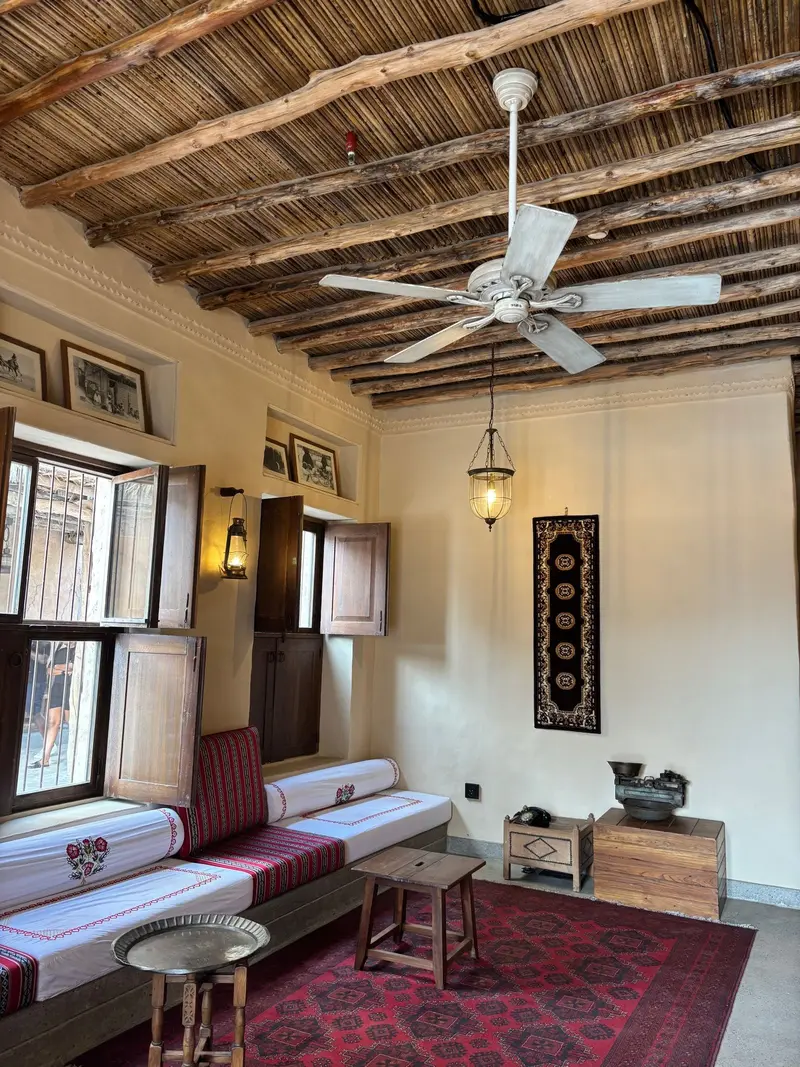
Put the coffee corner where guests see it as they arrive, usually beside the entrance or the majlis, clear of doors and walkways.
A few practical points help:
- Space. Leave room for the servers to stand and for guests to queue without blocking the door.
- Access. The team carries in the dallahs, cups and dates. Tell them about parking, lifts and loading bays, especially at hotels and offices.
- A table. If you want a station, you or the venue provide a table or counter. We do not rent furniture.
- Shade. Outdoors, keep the station out of direct sun during the day.
If you would rather not have a station at all, servers can walk among guests with the dallah. That needs no table.
When should the coffee be ready?
Coffee should be ready before the first guest arrives, so agree an arrival time with the team that leaves room to set up quietly.
The first minutes of an event shape how welcome guests feel. A guest who walks in and is handed a cup of gahwa and a date knows they are expected. Our team arrives early, sets up, and has coffee hot before the doors open. Tell the team the time guests are invited for, not just the start of the programme.
What are the customs for serving gahwa?
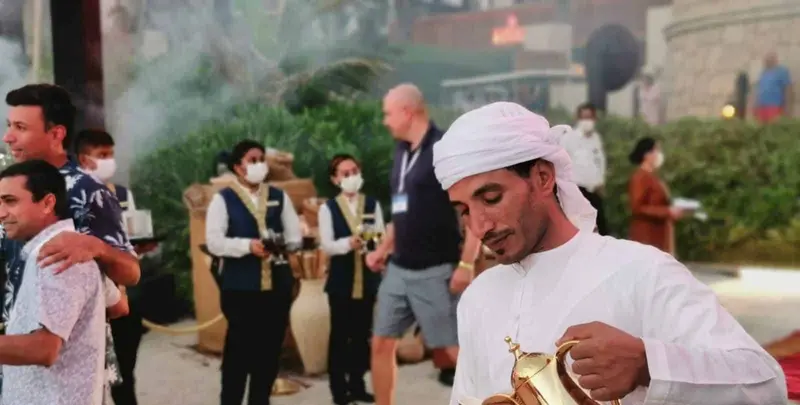
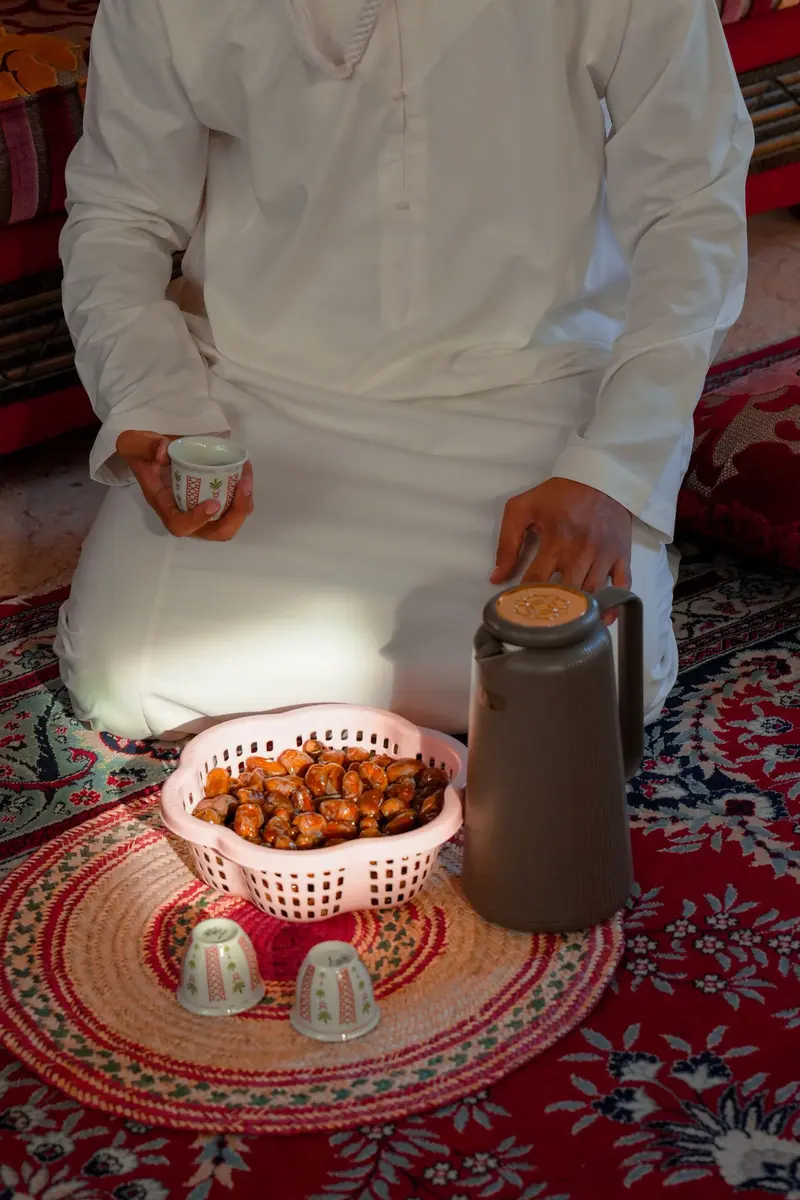
The server holds the dallah in the left hand, gives the cup with the right, serves the eldest guest first and pours a quarter cup.
These customs come from two sources we checked on 17 November 2026:
- Hands. Abu Dhabi Culture says the server holds the dallah in the left hand and the cup in the right, and the guest takes and returns the cup with the right hand (Abu Dhabi Culture, Gahwa). UNESCO's 2024 entry also says coffee is poured with the right hand (UNESCO, Arabic coffee, a symbol of generosity).
- Order. The most important or the oldest guest is served first, then the rest of the room (Abu Dhabi Culture).
- Amount. The cup is filled about a quarter and refilled (Abu Dhabi Culture, UNESCO).
- How many cups. A guest drinks at least one cup and not more than three (Abu Dhabi Culture).
- Saying enough. The guest gently shakes the cup to show they are done (UNESCO).
Some websites reverse the hand rule or give other rules. We follow the two sources above. For the history of the drink, read our guide to Arabic coffee (gahwa).
What should the host prepare?
Hosts prepare the space, access, a table if they want a station, the guest count and timing; the team brings coffee, dallahs, cups and dates.
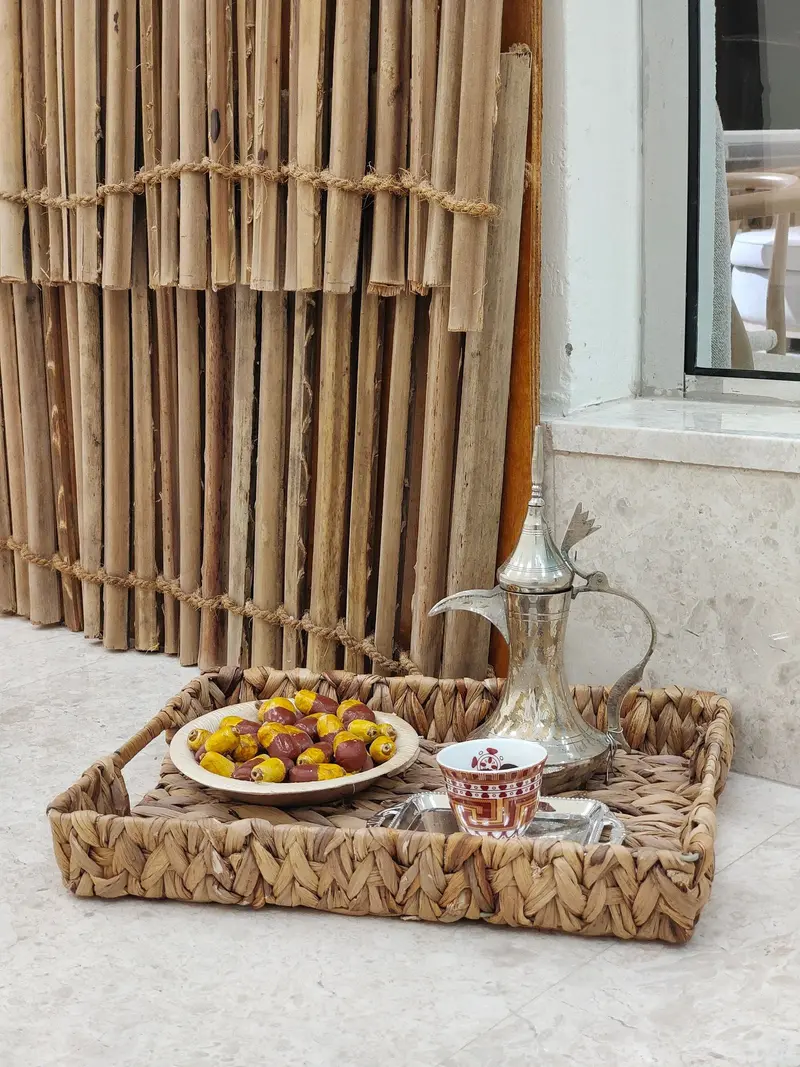
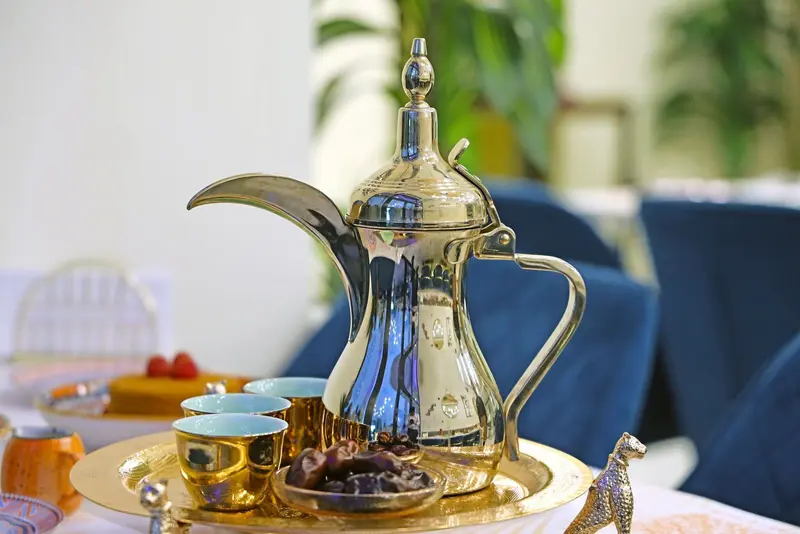
Your list is short: a clear spot, access for the team, a table if needed, and the times. Our list covers the rest: servers in traditional dress, dallah, finjan cups, Arabic coffee, dates and date juice, setup and clear-down. VAT and transport are added to the price. Abu Dhabi and Ras Al Khaimah add a travel fee. For National Day, Ramadan and Eid, book as early as you can.